
Building the Framework: Laser-Cut Metallic Structures for Implantable Devices
Many implantable medical devices are designed to restore function while avoiding highly invasive surgery. Whether maintaining blood flow, repairing structural defects, supporting damaged anatomy, or removing thrombotic material, these devices enable minimally invasive treatment through catheter-based delivery.
At the center of many of these technologies are metallic frameworks fabricated from materials such as nitinol and cobalt chromium. Used in applications ranging from vascular stents and occluders to structural heart repair systems and thrombus extraction devices, these laser-cut metal meshes provide the mechanical backbone needed for delivery and performance. Their ability to compress into low-profile catheters and recover highly engineered geometries after deployment has enabled increasingly sophisticated therapies.
Yet successful device performance depends on more than mechanics alone. Once implanted, blood and tissue immediately begin interacting with the device surface. In blood-contacting applications, exposed metallic structures introduce important considerations related to thrombogenicity, permeability, healing, and tissue integration. As implantable devices continue to evolve, increasing emphasis is being placed on engineering the interface between the metallic frame and the surrounding biological environment.
The challenge is no longer simply how to deploy a device, it is how to engineer what happens after deployment.
Building the Interface: Device Coverings for Biological Integration
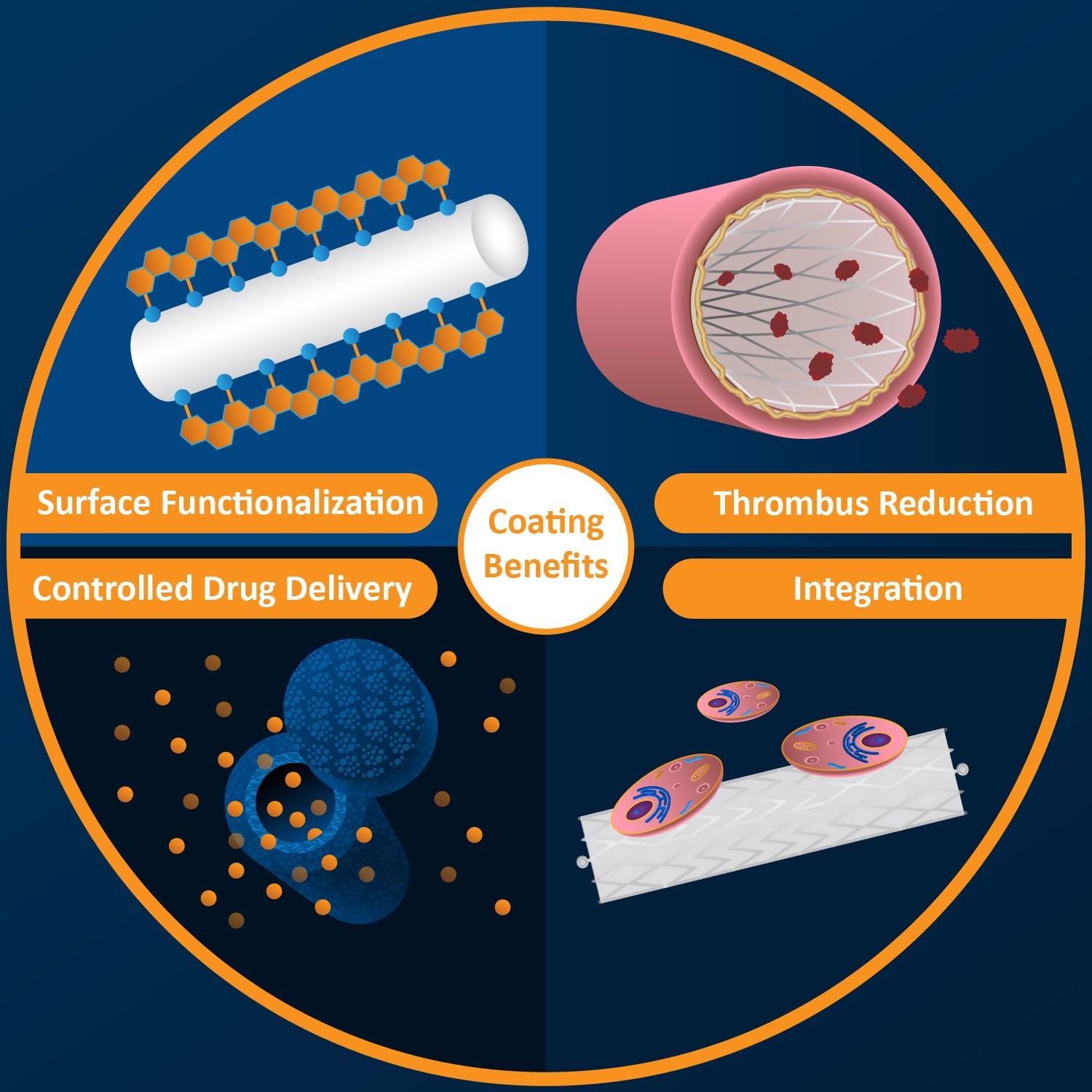
This challenge has driven the development of implant coverings designed to create a more functional interface between the device and the body. Depending on the application, coverings may be used to regulate blood permeability, encourage tissue integration, create barrier layers, or improve healing outcomes.
To accomplish these goals, implantable devices have historically relied on materials such as polyethylene terephthalate (PET) and expanded polytetrafluoroethylene (ePTFE). PET textile coverings are commonly manufactured separately and manually sutured onto metallic frameworks, an approach that remains an established standard across many implant categories. ePTFE-based coverings, particularly in vascular applications, are often selected where barrier functionality and blood exclusion are essential to device performance.
While clinically successful, these conventional approaches introduce important tradeoffs. Manual attachment of textile coverings can become increasingly labor intensive as implant geometries grow more sophisticated, particularly for highly contoured devices or open lattice structures. Traditional textile and membrane materials also possess relatively fixed architectures, limiting the ability to tailor permeability, tissue interaction, or biological performance to the specific demands of an implant.
Alternative strategies such as dip coating and lamination have attempted to address some of these challenges but introduce their own limitations. Dip coatings may create dense, occlusive layers that reduce permeability and flexibility, while laminated materials often require secondary bonding steps and may add thickness that compromises compressibility during catheter-based delivery.
As implant requirements continue to evolve, there is growing demand for covering technologies that provide greater tunability, conform more naturally to complex geometries, and better integrate with device manufacturing.
Engineering Biological Integration Through Electrospinning
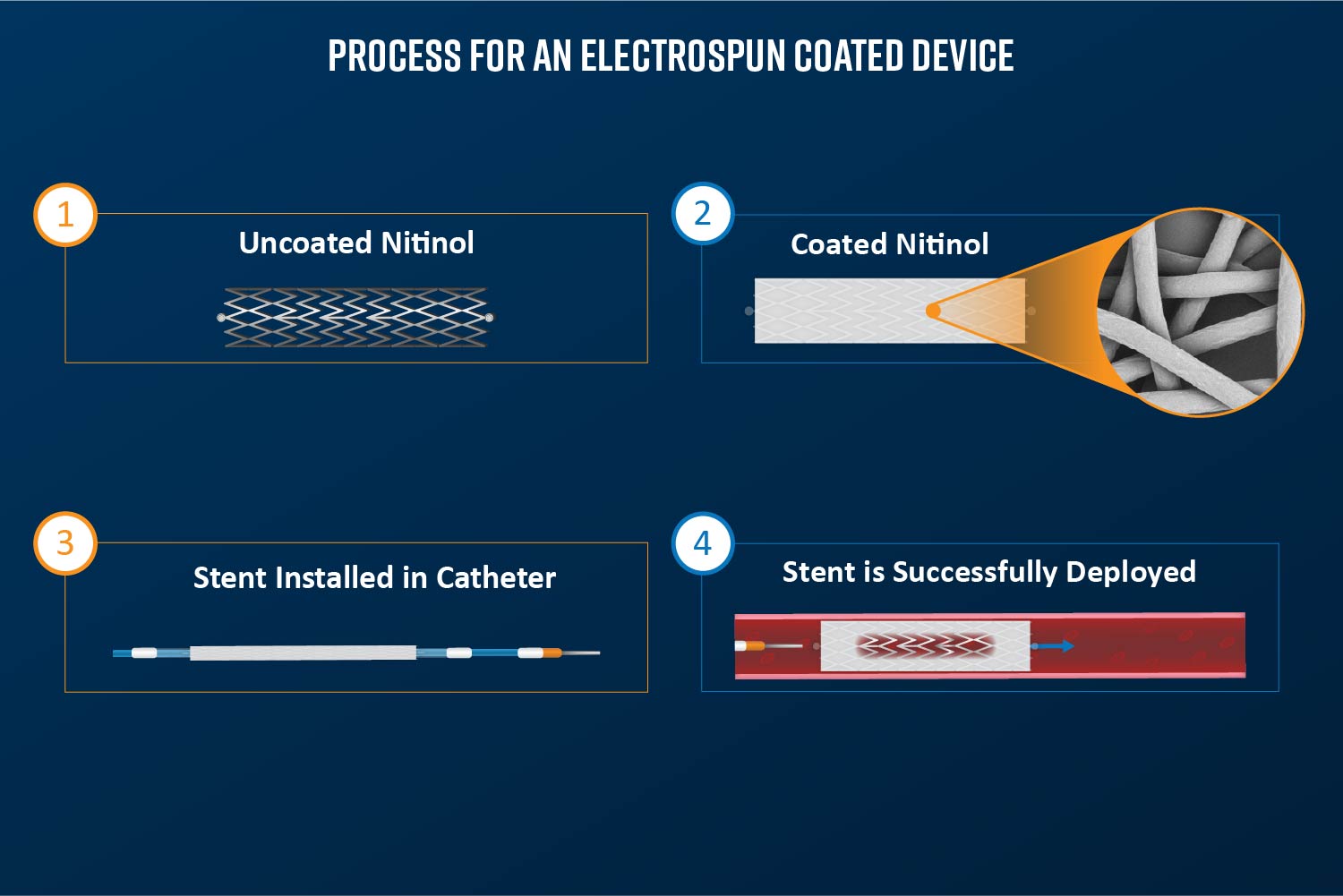
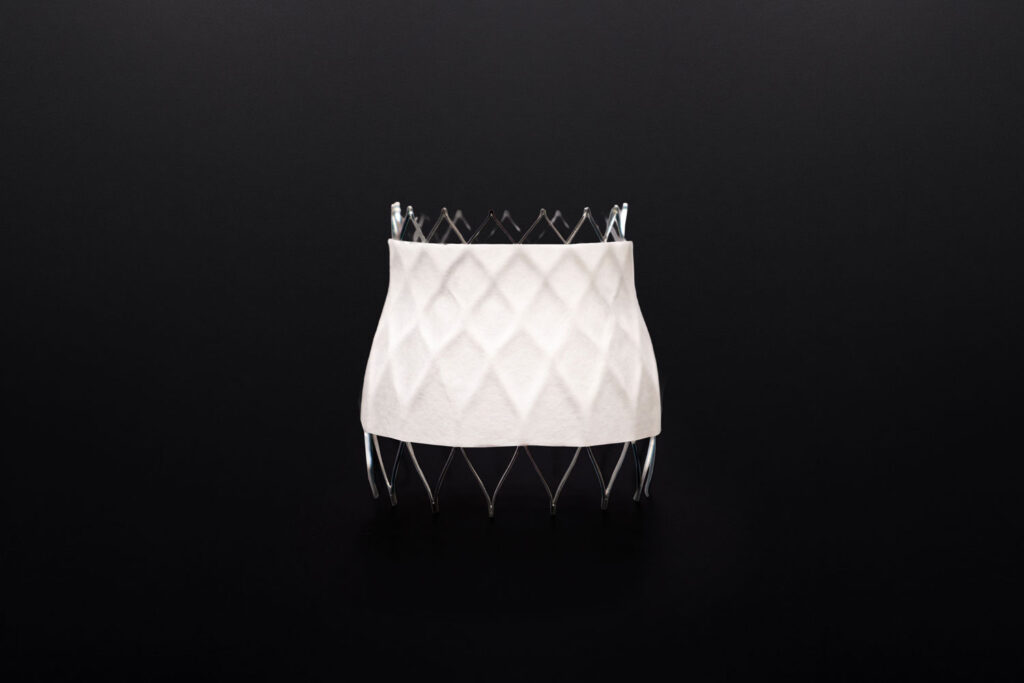
Electrospinning has emerged as a compelling alternative for implantable device coverings because it enables highly tunable fibrous materials to be deposited directly onto complex metallic frameworks. Unlike traditional textile coverings or laminated membranes that require secondary attachment, electrospinning allows conformal polymer deposition in a single processing step. This creates an opportunity to tailor both material architecture and biological performance to the intended function of the implant.
A key advantage of electrospinning is that it does not limit developers to a single material class. Familiar implant materials such as PET and PTFE-based systems can remain part of the design conversation, particularly where durability, barrier properties, or clinical precedent are important. At the same time, electrospinning expands the material toolbox to include elastomeric systems, degradable polymers, blends, and multilayer architectures designed for more specific biological or mechanical functions.
Among these materials, thermoplastic polyurethanes (TPUs) have emerged as especially attractive for catheter-delivered implants due to their elasticity, durability, and ability to recover following compression and deployment. Devices are often crimped into low-profile catheters, subjected to substantial deformation, and expected to recover their intended geometry without tearing or permanent deformation. TPU-based systems are particularly well suited to these demands and can be selected across a range of shore hardness values to tune flexibility, compliance, and mechanical support for the intended application.
For long-term implants, silicone-modified polyurethane systems (Si-TPUs) may offer additional benefits through improved oxidative stability and long-term durability while maintaining the elastic behavior needed for self-expanding metallic frameworks.
When combined with electrospinning, these material systems become even more powerful. Fiber diameter, porosity, and coating thickness can be precisely controlled to influence permeability, biological interaction, and mechanical behavior.
Rather than forcing device performance around an existing material, electrospinning enables materials to be engineered around the intended function of the implant.
For implantable devices, the success of an electrospun covering generally centers around three key engineering considerations:
- Adhesion and durability – ensuring coatings remain intact during catheter loading, deployment, expansion, and long-term use.
- Tuning material and fiber properties – tailoring permeability, tissue interaction, and mechanical performance through polymer selection and microstructural control.
- Precision coating of complex geometries – achieving conformal coverage across highly contoured metallic frameworks while maintaining device functionality.
Adhesion and Durability: Maintaining Coating Integrity
For implantable device coverings, adhesion to the metallic framework is one of the most critical engineering considerations. Regardless of biological performance, a coating must remain mechanically integrated throughout catheter loading, crimping, deployment, expansion, and, in some applications, retrieval. This becomes particularly important for self-expanding nitinol devices where repeated deformation can place significant stress on the coating interface.
Unlike textile coverings that are physically secured through suturing, electrospun materials rely on engineered integration with the implant itself. As a result, coating durability depends heavily on deposition strategy, polymer selection, and post-processing.
Several approaches may be used to improve adhesion and long-term coating integrity:
- Mechanical interlocking through multilayer architectures – Electrospinning enables bilayer or multilayer structures where an inner layer may be designed to better integrate with the metallic framework while an outer layer is optimized for biological performance. Fibers can also physically entangle around open lattice structures, wire intersections, and contoured geometries, improving retention through direct integration with the implant architecture.
- Tie-layer strategies – Spray-applied polymer tie layers may be introduced prior to electrospinning to improve bonding between the metallic frame and electrospun coating. This approach can be particularly valuable for highly dynamic devices expected to undergo significant compression and recovery.
- Post-processing approaches – Thermal treatment or controlled solvent exposure may be used to partially fuse fibers together or improve cohesion between coating layers, reinforcing durability in regions exposed to high mechanical stress.
Material selection also plays an important role. Elastomeric systems such as TPU-based materials are often advantageous because they can deform alongside self-expanding metallic frameworks during crimping and deployment without cracking or delaminating.
Ultimately, successful coatings must do more than simply adhere to the implant. They must move, flex, and recover alongside it.
Tuning Material and Fiber Properties for Biological Performance
One of the greatest advantages of electrospinning is the ability to engineer material performance through both polymer selection and fiber architecture. Unlike traditional textile coverings with relatively fixed structures, electrospinning enables direct control over fiber diameter, porosity, coating thickness, and material density, allowing coverings to be tailored to the biological and mechanical demands of a specific implant.
At the material level, polymer selection influences elasticity, durability, permeability, and long-term stability. Elastomeric systems such as TPU-based materials may be selected where flexibility and recovery during catheter deployment are critical, while PET or PTFE-based systems may support barrier functionality or leverage established clinical familiarity. In some applications, multilayer constructions may combine materials to create different functions within the same covering.
Equally important is control over fiber diameter and microstructure. Electrospun fibers can range from the nanoscale through tens of microns, with even modest shifts in fiber diameter significantly altering device performance. Smaller fibers provide increased surface area and may influence early biological interactions, while larger fibers often improve permeability, mechanical stability, and tissue infiltration.
Porosity and coating thickness further expand the design space. Electrospinning can produce exceptionally thin fibrous membranes, allowing biological functionality to be introduced without substantially increasing device profile or interfering with catheter-based deployment. Dense fiber packing may support barrier functionality or controlled permeability, while more open structures may encourage tissue integration and cellular infiltration.
As with any electrospun material, morphology also becomes an important quality consideration. Uniform fibers are generally preferred for predictable performance, while defects such as beading, ribboning, or incomplete fiber formation may alter permeability, mechanics, or biological interaction.
In many ways, electrospinning enables developers to engineer structure at the same scale biology experiences it.
Precision Coating of Complex Implant Geometries
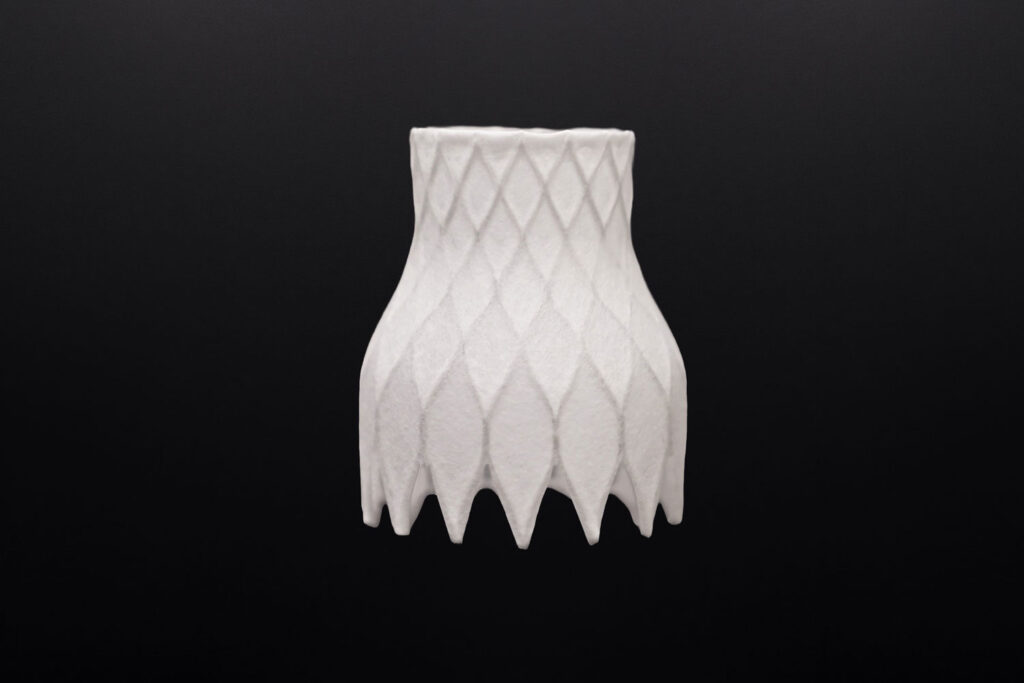
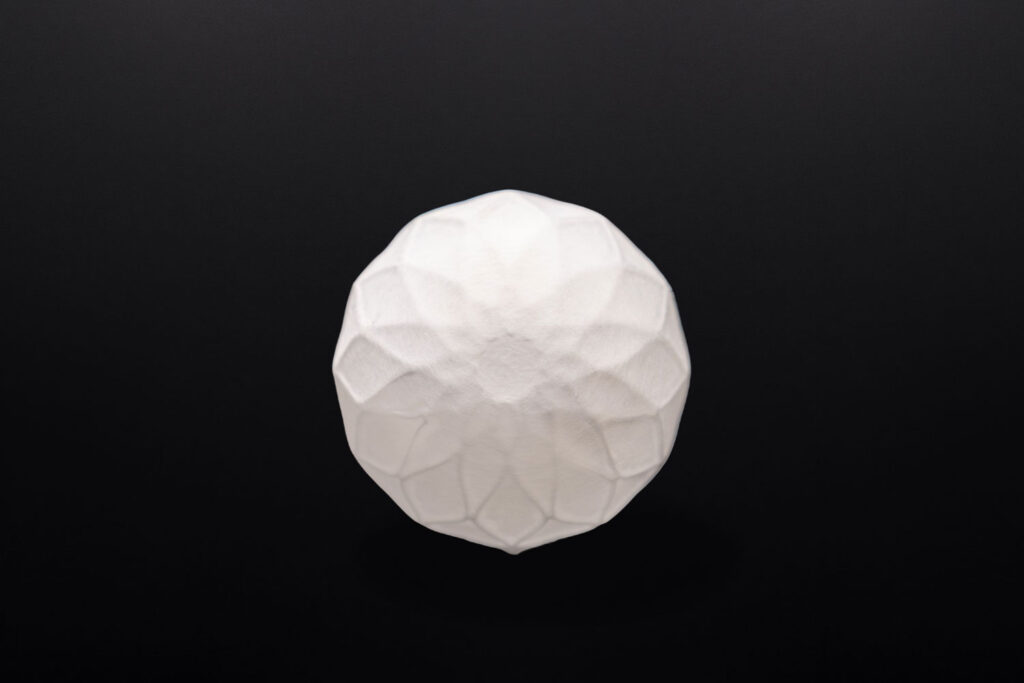
One of the most compelling advantages of electrospinning for implantable devices is the ability to precisely coat highly complex geometries. Modern implants are rarely simple structures. Structural heart frames, occluders, thrombus extraction devices, and embolic protection systems often contain intricate contours, open lattice structures, variable pore spacing, and anatomically driven shapes designed for highly specific clinical functions.
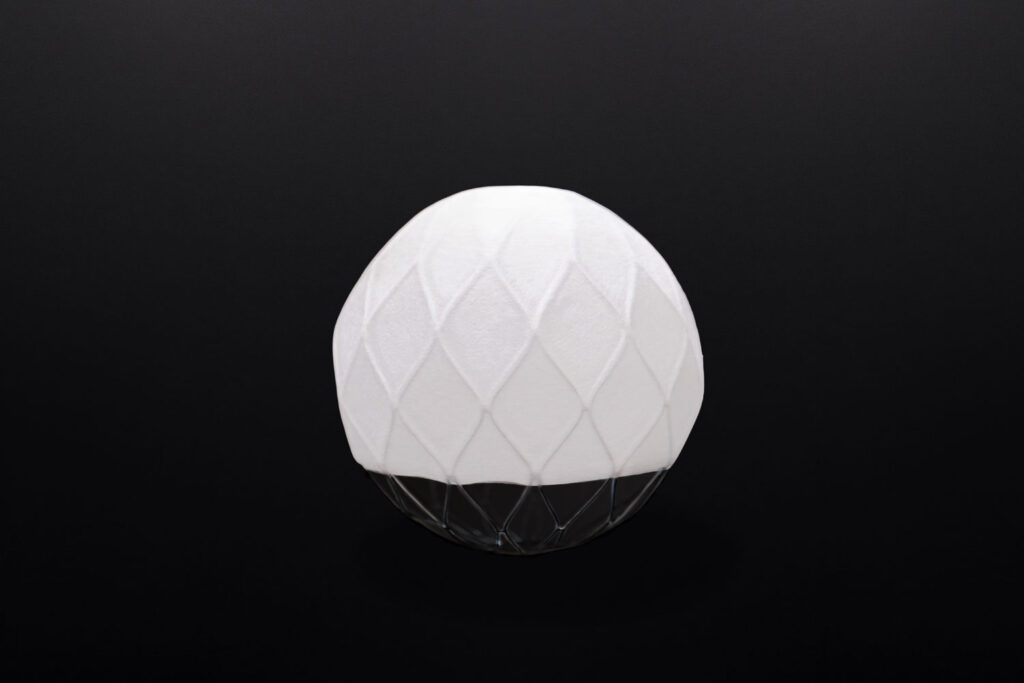
Unlike prefabricated textiles or membranes, electrospun materials are deposited directly onto the implant itself, allowing the coating to naturally follow the geometry of the device. Fibers can conform to curved surfaces, bridge open metallic structures, and create consistent coverage across highly contoured frameworks without extensive secondary assembly.
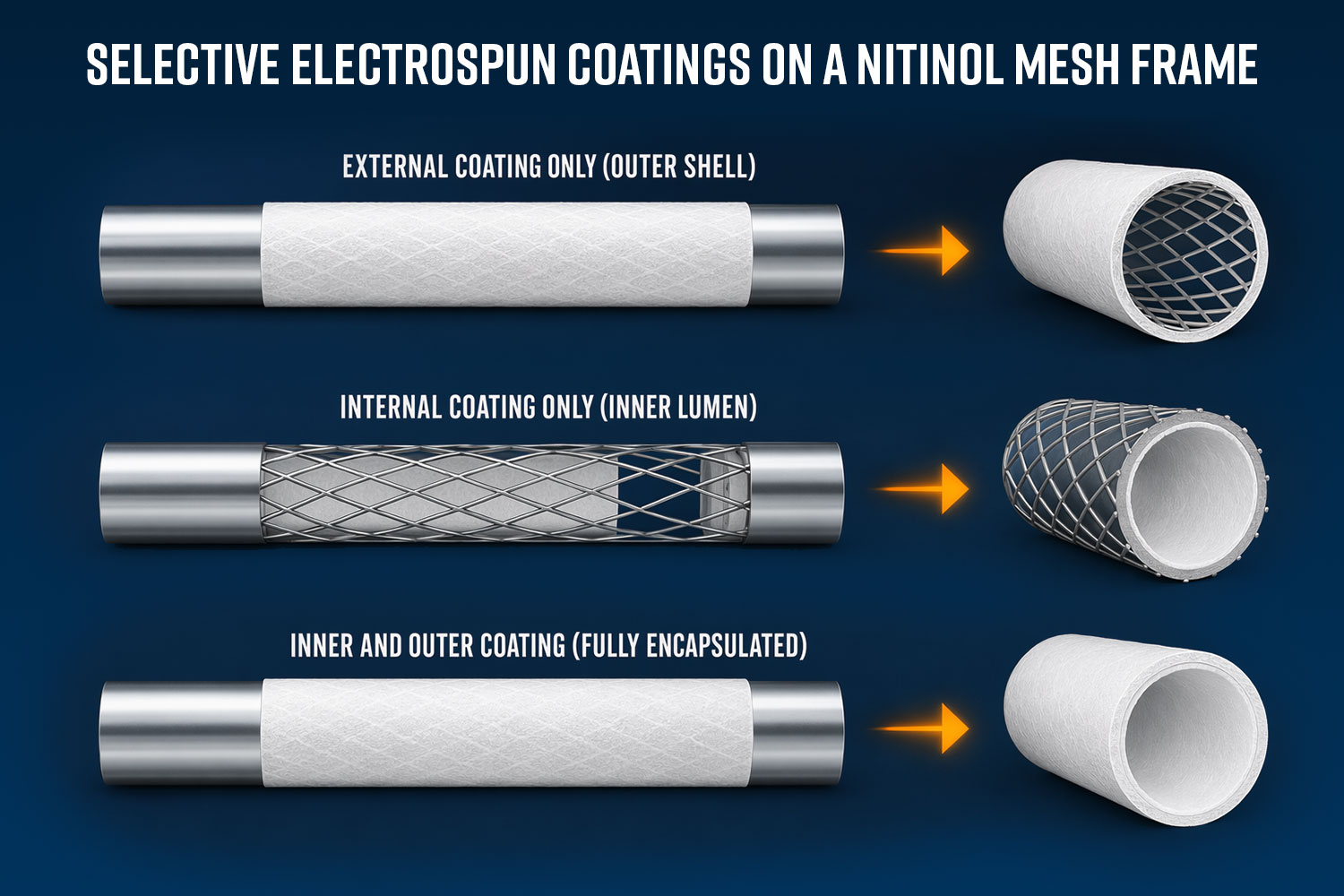
This direct deposition approach also enables greater precision in how material is applied. Coating thickness, fiber density, and porosity can be selectively tuned to support different functional regions of a device. More open structures may be maintained where permeability is important, while denser coatings can be introduced where barrier functionality or tissue interaction is desired.
Rather than forcing a device to accommodate a preformed covering, electrospinning allows the covering to be engineered around the geometry and intended function of the implant itself.
The Future of Implantable Device Coverings
Electrospinning for implantable device coverings is rarely a one-size-fits-all process. Material selection, adhesion strategy, fiber architecture, coating thickness, and deployment mechanics must all be carefully balanced against the intended function of the implant.
At Nanoscience, we partner with medical device developers to evaluate electrospinning as a viable pathway for complex implant coverings. Our team works across material selection, electrospinning process development, and characterization to help design coatings tailored to the biological and mechanical requirements of catheter-delivered devices.
Whether exploring TPU-based systems for long-term implants, evaluating barrier materials for vascular applications, or developing conformal coatings for highly engineered geometries, we help translate electrospinning from concept to functional implant covering.