
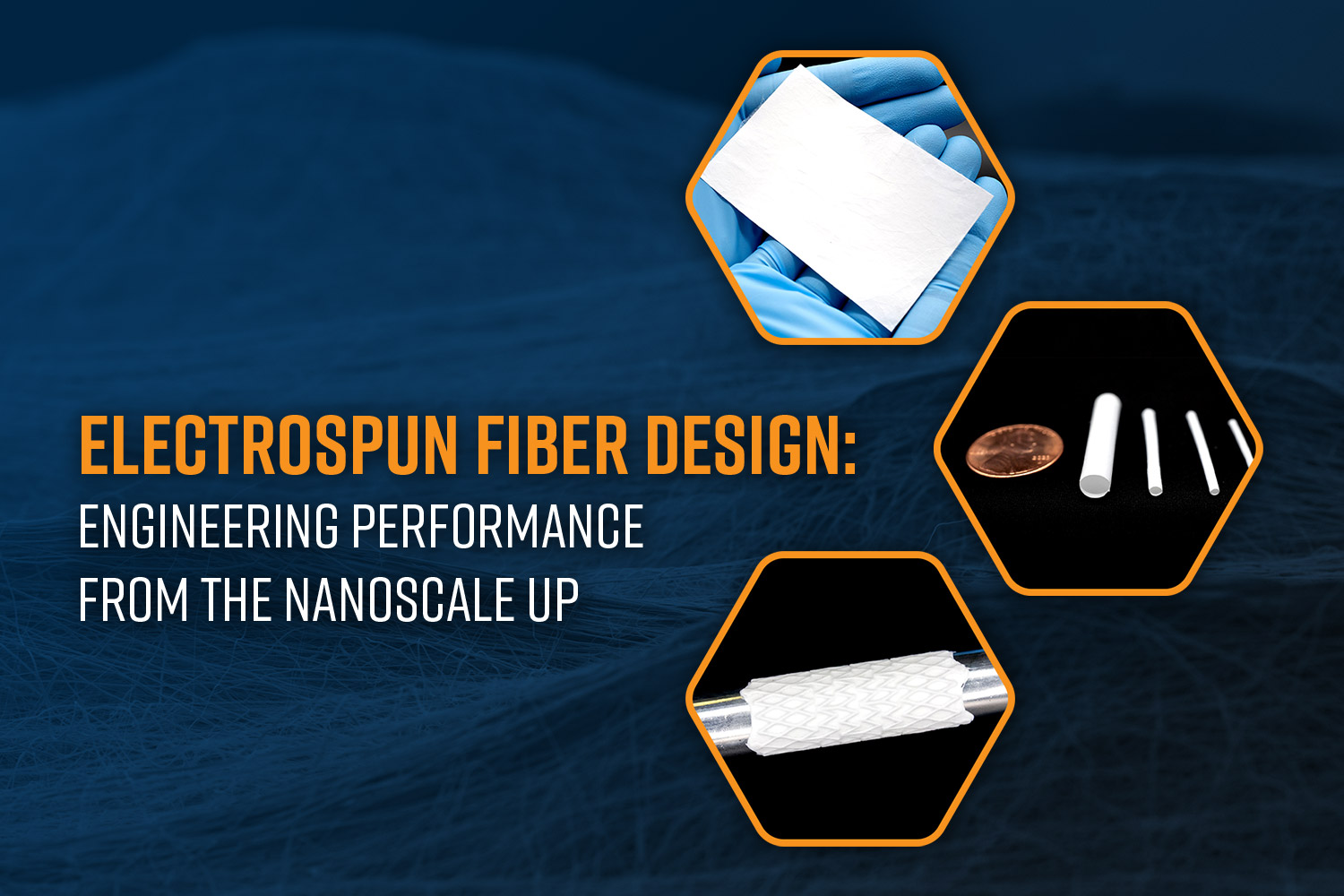
Electrospinning at the Macroscale
Electrospun fiber mats are used across industries, from early applications in filtration to emerging technologies in MedTech. These materials are highly versatile, with properties that can be tailored through careful selection of polymers and processing conditions to meet specific application requirements.
The inherently high surface area of electrospun materials enables a wide range of functional benefits. In filtration, this translates to efficient particulate capture with low pressure drop. In biomedical applications, electrospun scaffolds support cell adhesion and proliferation, while thin conformal coatings can serve as engineered interfaces between medical devices and biological systems.
When designing an electrospun material at the macroscale, several key decisions define performance: polymer selection, material form factor, and target material properties. These parameters determine how the material behaves in its final application, whether as a free-standing membrane, a tubular structure, or a device coating.
However, the true advantage of electrospinning lies beneath the surface.
At high magnification, electrospun materials reveal a complex network of interconnected fibers. This nanoscale architecture governs many of the functional properties observed at the macroscale, making it essential to design not only for bulk form, but for fiber-level structure.
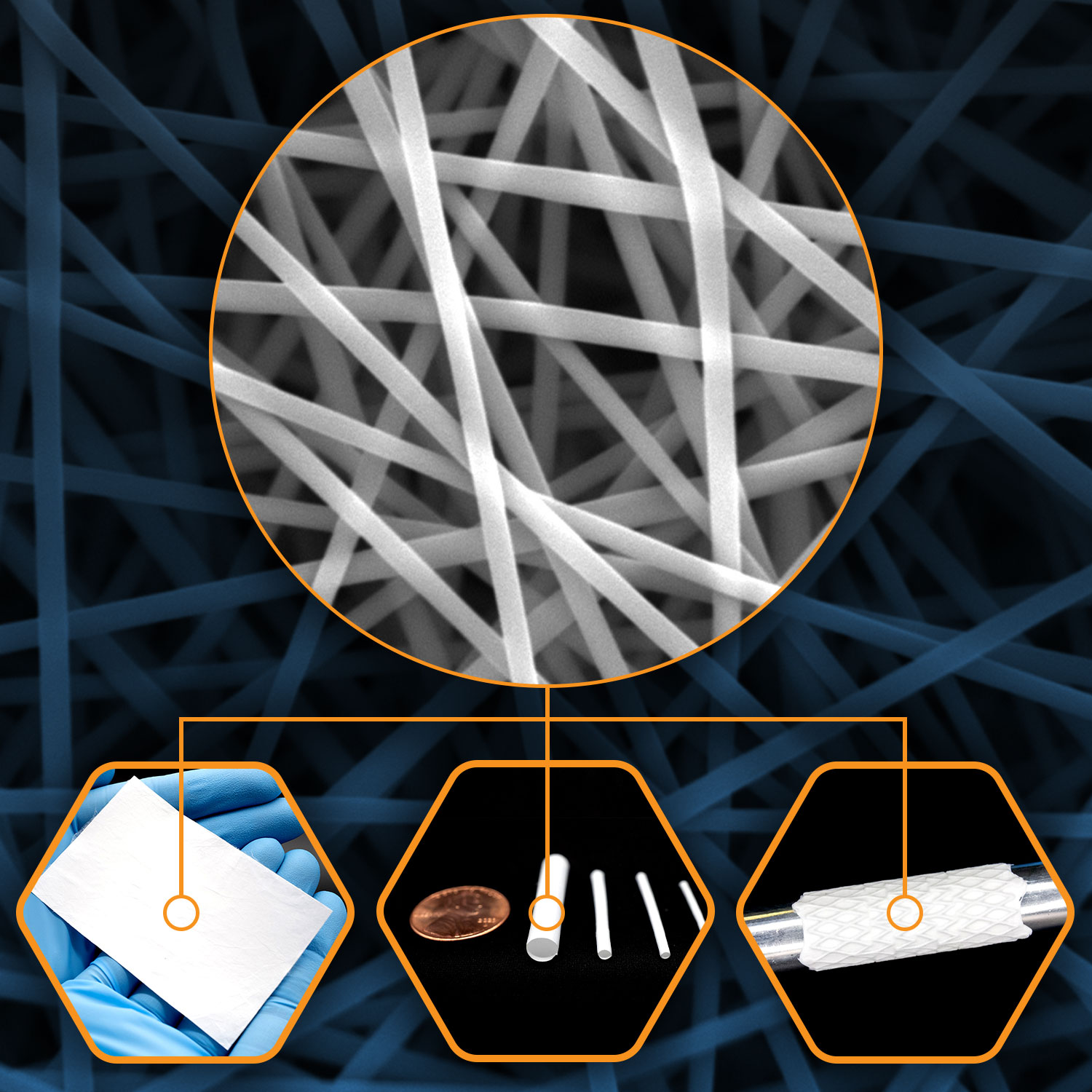
Electrospinning at the Nanoscale
While electrospun materials are often evaluated at the macroscale, their true functionality is defined at the nanoscale.
When polymers are processed into fibers with diameters ranging from nanometers to microns, they exhibit behaviors that differ significantly from their bulk form. The resulting high surface area and interconnected porous structure enable unique performance characteristics, including enhanced mass transport, tunable degradation, and controlled interactions with biological or chemical environments.
These properties are not incidental. They are engineered.
Electrospinning is governed by a dynamic interplay between polymer formulation and process parameters, including solvent system, polymer concentration, applied voltage, and environmental conditions such as temperature and humidity. By tuning these inputs, it becomes possible to precisely control fiber formation and, in turn, material performance.
At this scale, electrospun materials are best understood through three primary design parameters:
- Fiber Diameter – Defines the scale of the fibrous network and plays a central role in surface area, pore structure, and transport behavior
- Fiber Morphology – Describes the shape and uniformity of fibers, influencing consistency, surface interactions, and structural integrity
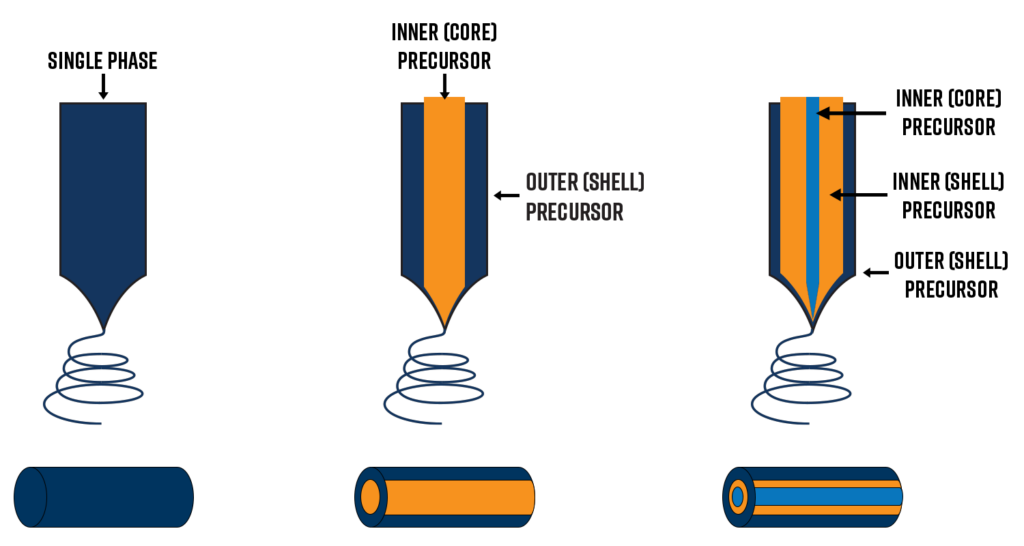
- Fiber Structure – Refers to the internal architecture of the fiber (e.g., homogeneous, core-shell, or hollow), enabling advanced functionality within a single material
Together, these parameters form the foundation for engineering electrospun materials. By controlling them individually and in combination, materials can be tailored to meet the specific demands of applications ranging from filtration to regenerative medicine.
Fiber Diameter: Defining Material Performance at the Nanoscale
The selection of an appropriate fiber diameter to meet specific material requirements is typically the first step in electrospun material development. While electrospinning is often associated with nanofiber formation, its capabilities span a broad range from ~100 nm to 30 µm, with most practical applications falling within the 0.8–2 µm range.
Smaller fibers drive interaction and control at the interface, while larger fibers enable permeability, strength, and material stability.
This relationship becomes especially clear in filtration applications, where targeted control of fiber diameter can directly influence performance. For example, by modifying fiber diameter alone, without changing the polymer system or membrane thickness, electrospun materials can shift from exceeding MERV 15 ratings to performing closer to MERV 8 with only subtle increases in fiber size.
In MedTech applications, similar sensitivity exists. Small adjustments in fiber diameter can alter fluid perfusion through a membrane, tune the mechanical response of coatings on devices such as stents, and influence cellular and protein interactions at the material interface. In some cases, these effects are further enhanced through multi-scale design approaches, such as co-spinning interwoven populations of small and large fibers or constructing bilayer architectures to introduce gradient properties across the material.
When determining the appropriate fiber diameter for an application, a common approach is the rapid development and evaluation of a controlled diameter range. By systematically screening across this range, it becomes possible to identify a functional window that balances interaction, transport, and mechanical performance before refining additional material parameters.
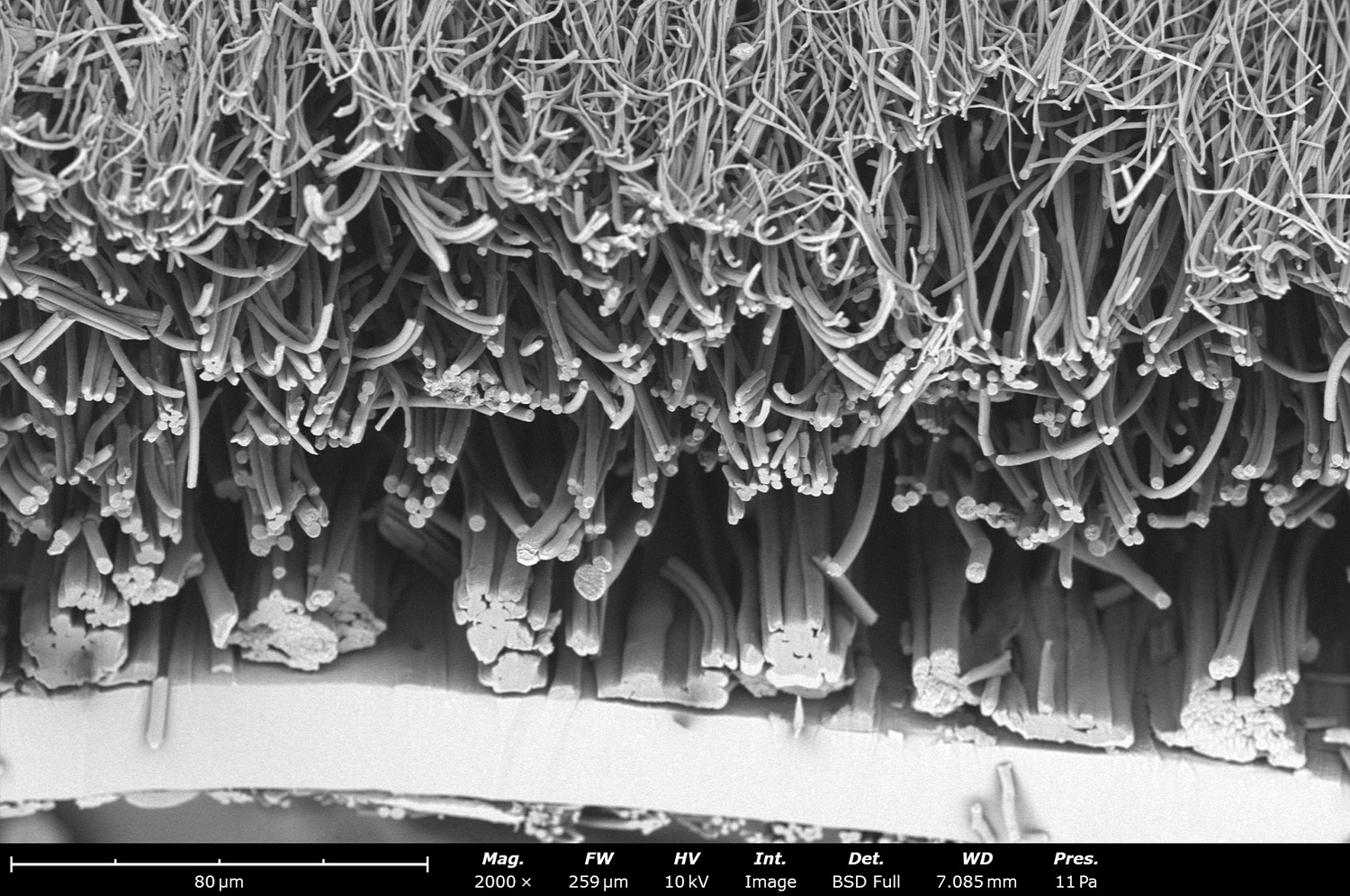
Fiber Morphology: A Measure of Material Quality and Process Control
A consistent indicator of quality in electrospinning is the morphology of the resulting fibers, most commonly evaluated through their visual appearance. In practice, a high-quality process produces uniform, continuous fibers with a narrow diameter distribution, typically targeting a standard deviation of ~10% or less.
Due to the inherent dynamics of electrospinning, some variability is expected. However, tighter control over solution formulation, processing parameters, and environmental conditions directly translates to improved uniformity and reproducibility. As such, fiber morphology serves as both a quality metric and a real-time indicator of process stability.
In an optimized system, fibers appear smooth, cylindrical, and consistent in both size and shape. Deviations from this ideal morphology can introduce variability in material performance and may signal underlying process instability.
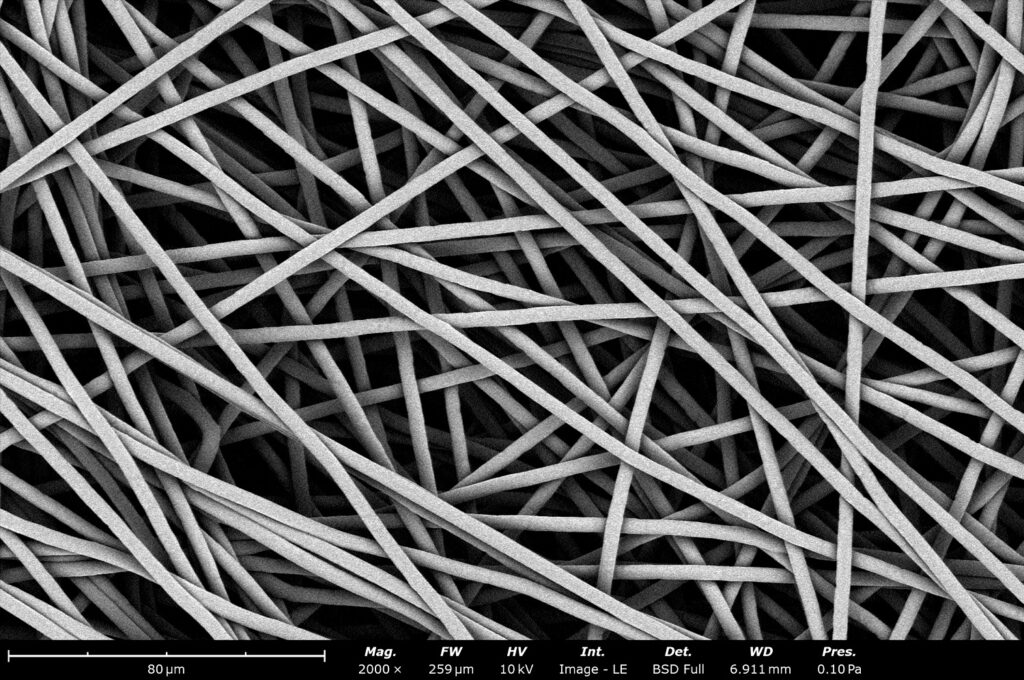
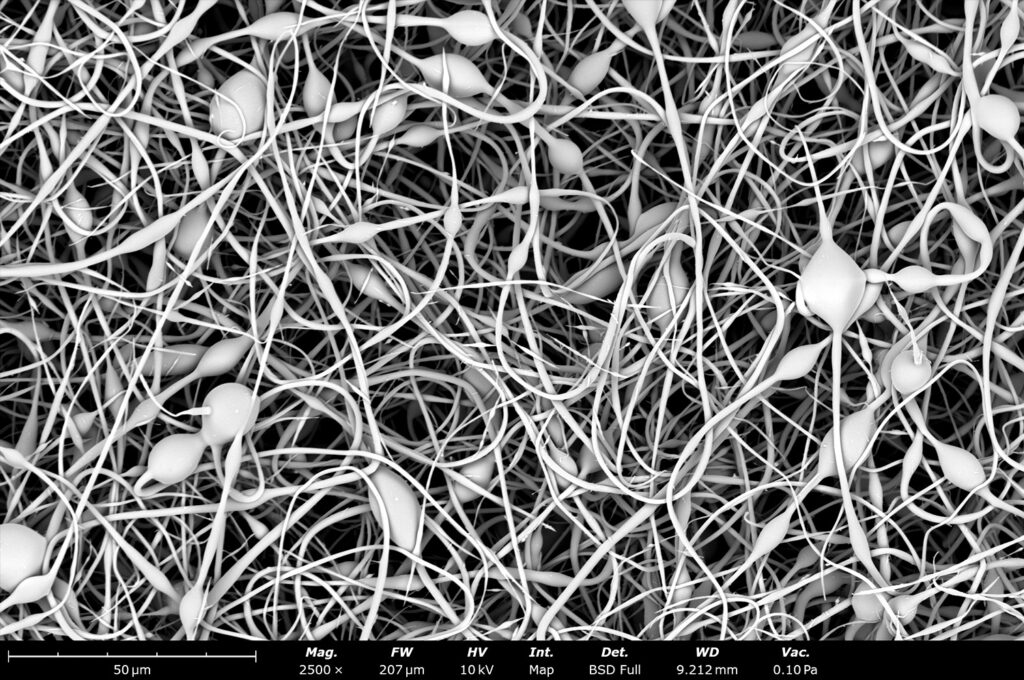
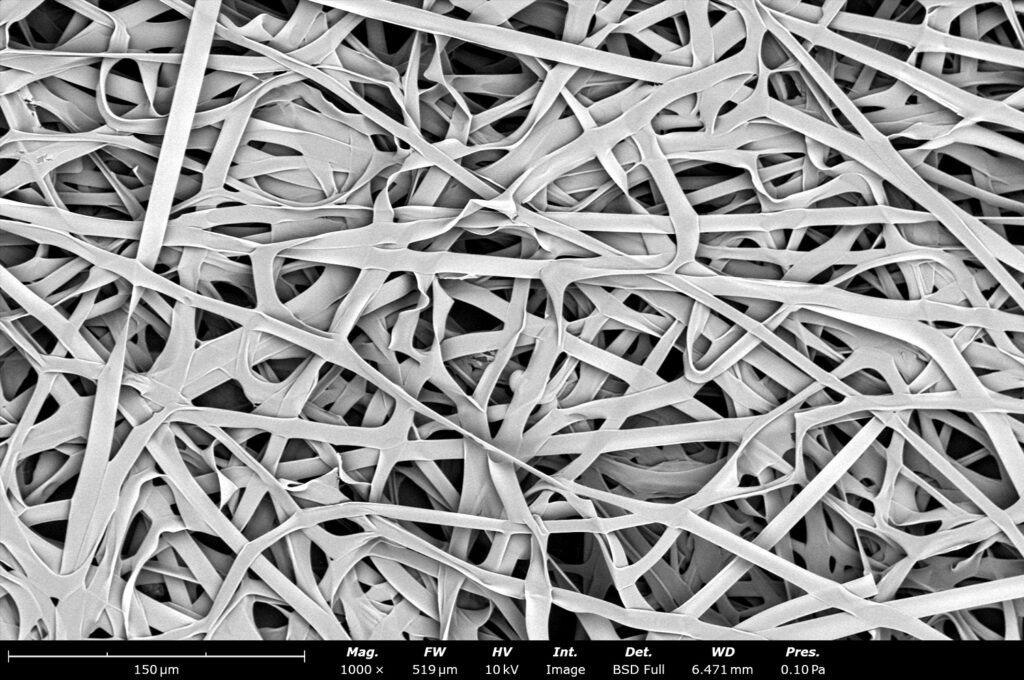
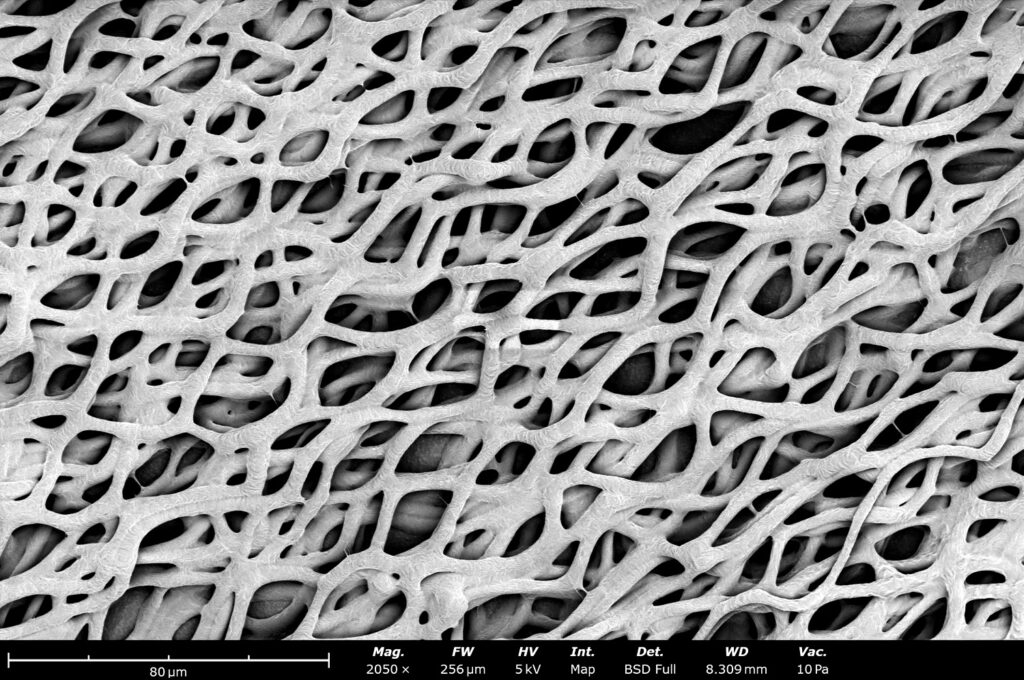
Common morphological variations include:
- Uniform fibers – Smooth, continuous, and cylindrical fibers with minimal defects and a narrow diameter distribution. These represent a well-controlled electrospinning process and are typically desired for achieving consistent mechanical properties, predictable pore structure, and reproducible material performance.
- Beaded fibers – Characterized by periodic thickened regions along otherwise thin fibers, often resulting from insufficient polymer chain entanglement or unstable jet formation. These defects can disrupt pore uniformity and mechanical consistency. In many cases, beading can be mitigated through adjustments to solution concentration or flow rate.
- Ribbon-like fibers – Flattened fiber structures that typically arise from solvent evaporation dynamics or higher molecular weight systems. These fibers can alter packing behavior and surface characteristics relative to cylindrical fibers.
- Fused or “wet” fibers – Occur when fibers merge at contact points due to incomplete solvent evaporation, often driven by short working distances, high flow rates, or environmental conditions. This can reduce porosity and compromise the intended architecture.
From a development perspective, fiber morphology is more than a visual characteristic, it is a diagnostic tool. It provides immediate feedback on whether a process is well-controlled and capable of producing materials with consistent, predictable performance.
Ultimately, achieving uniform fiber morphology is critical not only for meeting functional requirements, but for ensuring scalability and manufacturing robustness.
Fiber Structure: Enabling Advanced Material Functionality
The traditional electrospun fiber consists of a solid, cylindrical structure formed from a single polymer or a blended composite system. While this architecture supports a wide range of applications, electrospinning also enables more advanced fiber structures that introduce additional functionality at the individual fiber level.
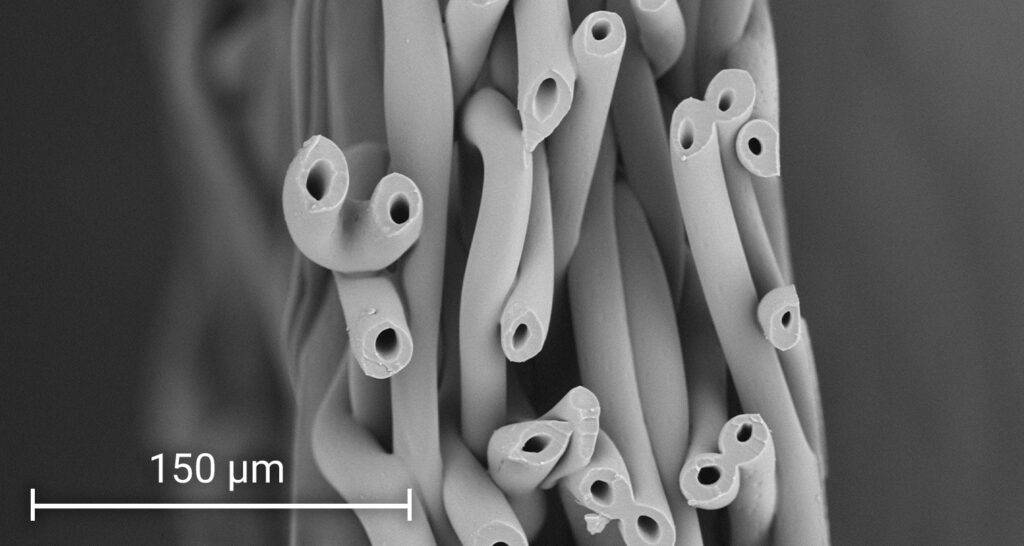
Through the use of coaxial electrospinning, fibers can be engineered with distinct internal architectures, including core–shell and hollow structures. This approach utilizes a concentric needle system, allowing two independent streams to form an inner core and outer shell during fiber formation.
Hollow fibers are typically produced by introducing a continuous gas or removable core phase through the inner needle, while the polymer solution forms the outer shell. The resulting structure reduces material density while maintaining overall fiber dimensions, making it advantageous in applications where weight reduction, increased porosity, or enhanced transport properties are desired without compromising handleability.
Core–shell fibers provide a platform for combining multiple material functions within a single fiber. The outer shell can be engineered for mechanical strength, environmental stability, or interfacial interaction, while the inner core can be tailored independently. This enables strategies such as:
- Controlled degradation profiles through selective material placement
- Encapsulation and release of active pharmaceutical ingredients (APIs)
- Decoupling of mechanical and functional properties within the same material system
By enabling spatial separation of materials at the fiber level, these advanced structures significantly expand the design space of electrospun materials, particularly in applications such as drug delivery, regenerative medicine, and functional coatings.
From Fiber Design to Real-World Performance
Fiber diameter is one of the most critical levers in electrospun material design because it directly defines how a material interacts, transports, and performs in its intended environment. The “right” diameter is not a fixed value, it is identified through targeted development, where controlled ranges are evaluated against application specific requirements. By understanding how diameter, morphology, and structure work together, materials can be precisely tuned for performance.
We partner with you to define and develop that optimal window, turning nanoscale control into functional, scalable solutions.