
Precision Electrospinning for Medical Devices: A Measurement-Driven Approach
Electrospinning has become a foundational technique in medical device materials engineering, enabling the fabrication of nanofiber mats with precisely tunable structural and functional properties. These materials are increasingly used in applications such as vascular grafts, wound dressings, drug-eluting coatings, filtration membranes, and tissue-contacting scaffolds, where clinical performance depends directly on consistent fiber morphology, mechanical integrity, […]
Electrospinning Demystified: Why Factorial Design of Experiments is the Key to Precision
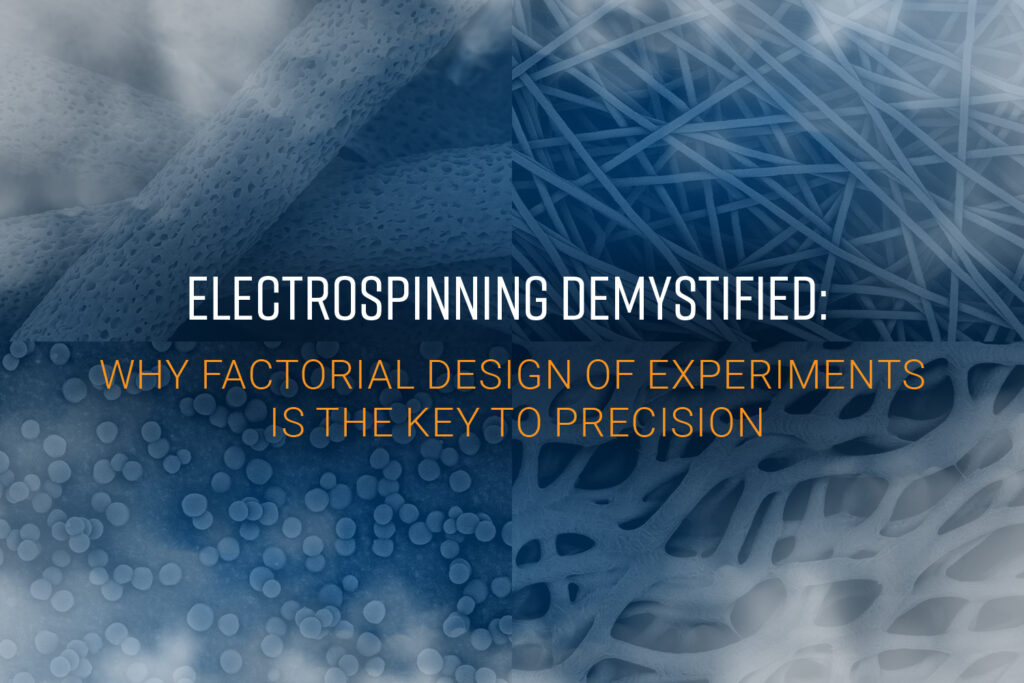
Electrospinning is a powerful technique for producing nanofibers, yet it’s often described as more art than science. Researchers frequently refer to it as “black magic” because of its sensitivity to a vast array of variables, many of which interact in unpredictable ways. A slight change in polymer concentration, solvent choice, or ambient humidity can dramatically […]
Should You Outsource Electrospinning Development to a CRO? A Strategic Guide for R&D Leaders

Electrospinning is a powerful technique for creating nanofibers with applications across biomedical, filtration, energy, and advanced materials. When it comes to developing new electrospun materials or scaling up production, many R&D teams face a critical decision: should you outsource development to a contract research organization (CRO), or bring the equipment and expertise in-house? Bringing electrospinning […]
Leveraging Polymers for Biomedical Applications

Polymers play a central role in biomedical applications due to their versatility, tunable properties, and biocompatibility. By engineering polymers, scientists can control structural and mechanical properties, degradation rates, and bioactivity, making them ideal materials for next-generation biomedical devices and therapies. Both natural and synthetic polymers play essential roles in biomedical applications. Natural polymers, such as […]
SEM & DLS: Complementary Techniques for Particle Analysis

Analyzing particles is essential in a wide range of scientific and industrial fields. Particle characteristics such as size, shape and surface properties can affect the mechanical, optical, thermal and magnetic properties of the material and significantly influence the behavior and functionality of materials. The particle properties can also affect their performance in a range of […]
Electrospinning Nanoparticles for Biomedical Devices
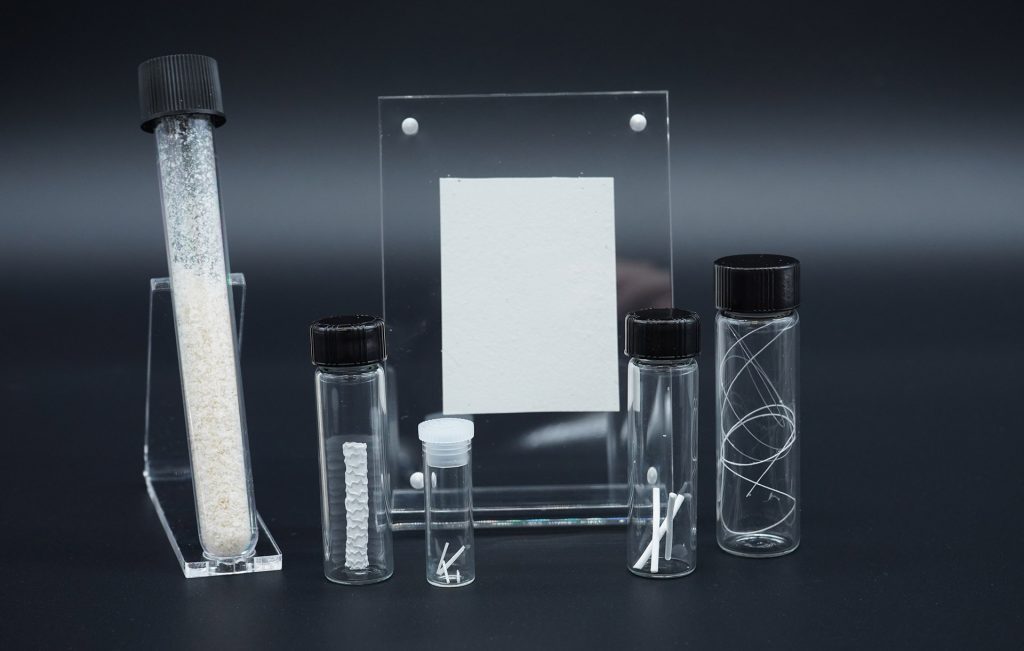
Nanoparticles have revolutionized the field of biomedicine, playing a pivotal role in enhancing diagnostic and therapeutic strategies. When administered as free particles, nanoparticles face significant challenges, including rapid clearance from the bloodstream by the immune system and non-specific distribution throughout the body. These factors result in reduced effectiveness and potential toxicity. To overcome these challenges, […]
Electrospinning Transdermal Drug Delivery Systems
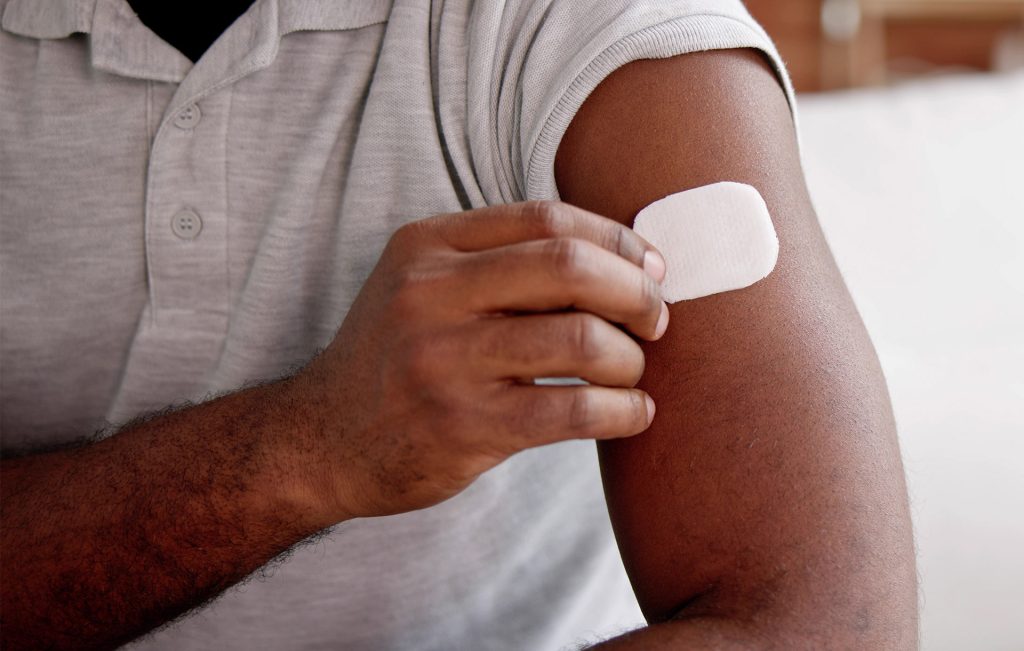
Transdermal drug delivery systems (TDDSs) use active pharmaceutical ingredients (APIs) to deliver therapeutic healing. However, many of these APIs are photosensitive and degrade when exposed to UV light sources. One of the most common ways TDDSs combat photodegradation is to use a blend of synthetic adhesives with APIs to deliver drugs while remaining adhered to a targeted site.
Electrospun Chitosan for Wound Healing Applications
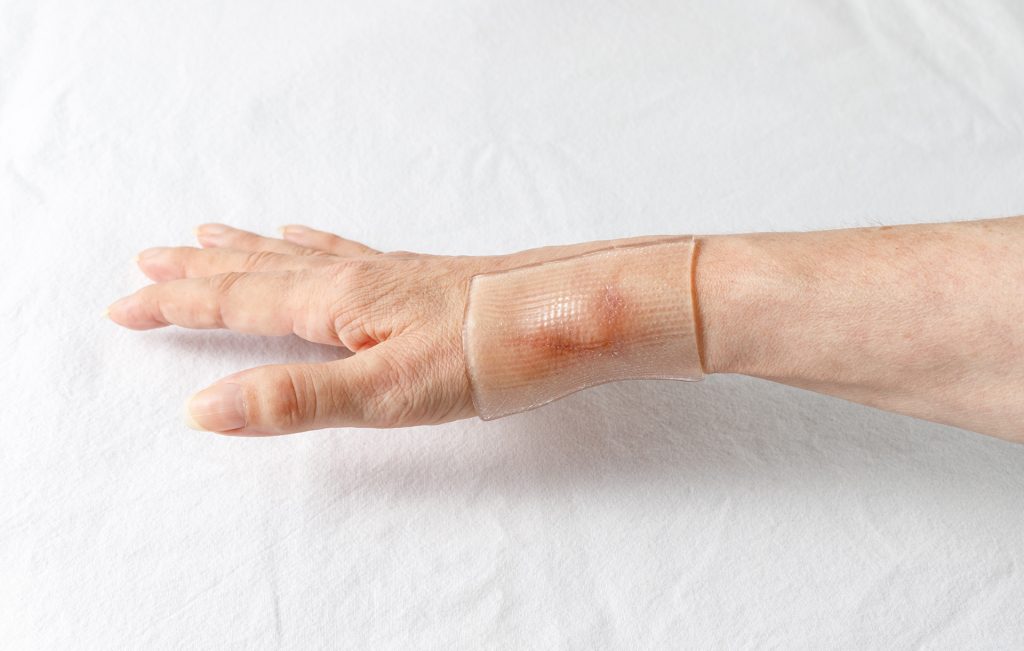
Skin injuries, infections, or diseases are a frequent occurrence within the general population. Oftentimes wound dressings or skin grafts are placed or implanted over the area of injury to assist with healing. The primary role of wound dressings is to isolate the site of injury from the environment and deliver drugs to allow the natural healing process to heal the wound. However, wound dressings require frequent exchanges irritating the injury site or pose an inherent risk to infection. Also, they do not play an active role in the healing process. Skin grafts on the other hand play an active role in the healing process. But many skin grafts either are limited in availability or pose a significant risk to rejection or infection.
Leveraging Electrospinning for Vascular Stent Coating
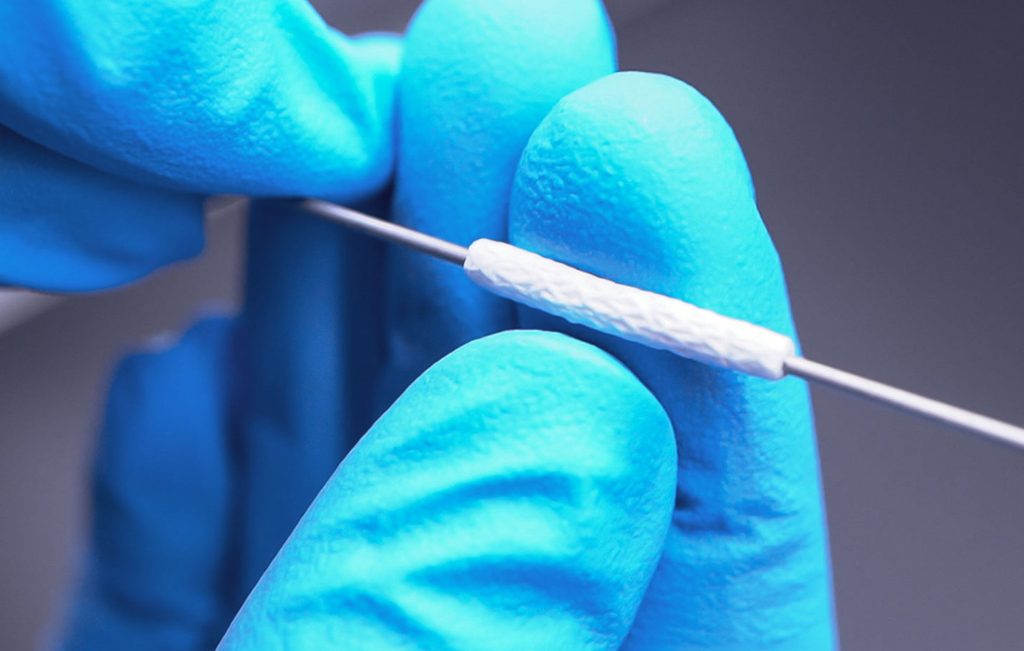
Scanning Electron Microscopy (SEM) is a powerful tool used to examine surfaces with high resolution. SEM works by scanning a sample’s surface with a focused electron beam to generate detailed, high-magnification images. However, imaging nonconductive materials, like polymers, textiles, and ceramics, can be challenging due to their inability to conduct electricity, which leads to charge buildup on the sample surface. This charge accumulation can distort the electron beam path, resulting in poor image resolution and quality. To address this fundamental issue, several methods are available to minimize charge buildup and optimize SEM imaging of non-conductive materials.
5 Approaches for Optimizing SEM Imaging of Nonconductive Samples
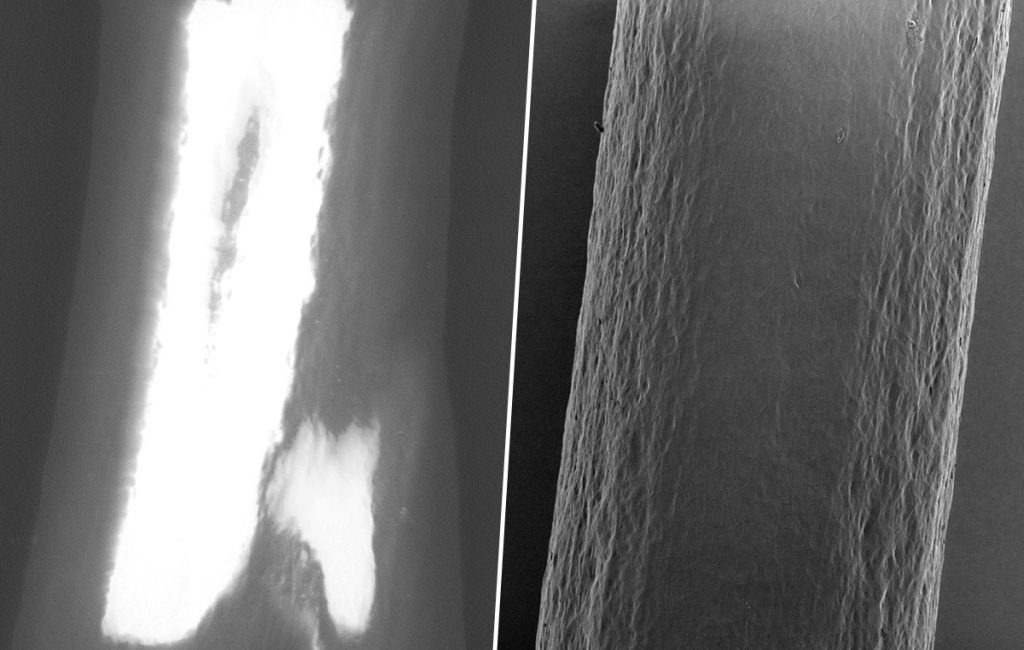
Scanning Electron Microscopy (SEM) is a powerful tool used to examine surfaces with high resolution. SEM works by scanning a sample’s surface with a focused electron beam to generate detailed, high-magnification images. However, imaging nonconductive materials, like polymers, textiles, and ceramics, can be challenging due to their inability to conduct electricity, which leads to charge buildup on the sample surface. This charge accumulation can distort the electron beam path, resulting in poor image resolution and quality. To address this fundamental issue, several methods are available to minimize charge buildup and optimize SEM imaging of non-conductive materials.